The Bedside Bookstack – November 2025

If I Survive You by Jonathan Escoffery, 4th Estate, 2022

Whoa, this one has so much going on. From a content perspective, there’s so much I’m still thinking about. Trelawney’s family migrate to the States from Jamaica at the end of the 70s. They settle in Miami but it isn’t easy. His brother was born in Jamaica and has an easy association with his identity but Trelawney is born in the states and doesn’t yet have an answer when people inevitably ask him, “What are you?’

From a craft perspective, it’s a really successful use of the 2nd person narration – so hard to do and so well done here. It’s also right up my alley with the semi-novel semi- story-cycle structure. I love the multiple voices you get from it and have no problem that it isn’t all nicely balanced out between the characters.

Sea Change by Gina Chung, Picador, 2023

This book took me weeks to read. I liked it but could only read a few pages at a time. I think it says a lot more about the time of year and the kind of year it’s been for me than the book itself which was an interesting read.

Aurora works at the aquarium her dad used to work at with a giant octopus called Dolores. This is a near future where Aurora’s boyfriend has broken up with her and become one of the first people to go on a one-way trip to Mars. Dolores is a mutant from a part of the Ocean called the Bering Vortex, a toxic rubbish area which Aurora’s dad was also studying. He’s been missing for decades now, last seen heading out to the Bering Vortex. So it’s all there, with a great premise and the requisite need to move on, grow up and address the rift between her mother and her.

Through the Rubble by Alan Playford, Big Sky Publishing, 2025

Alan Playford was my November Books at the Bowlo guest and he has, as they say, lived a life. He was instrumental in the creation of helicopter paramedicine and the Westpac Rescue chopper which we have today in the Hunter. He was part of the Newcastle Earthquake rescue and also spent time in Rwanda, Timor-Leste and the Solomon Islands.

It’s a sobering read about events which were headlines that you almost forget over the years. He’s very honest about the personal toll those experiences had on his life in relation to his own mental health and family life and is an advocate for better care for frontline workers.

We Need Your Art by Amie McNee, Penguin, 2025

I seem to need regular creative kickstarts. I get started with a routine and then life intervenes and it all goes off course and getting back on track feels that much harder. This book came along at the right time for me. McNee’s premise is that you need to have a coronation, crown yourself and simply give yourself permission to create and be an artist. She also believes that a creative habit is short amount of times continued regularly. Her reasoning is that there’s less pressure to create something amazing and more practice and actual creating.

I haven’t finished it yet, but it’s resonating as pretty realistic for modern life.

If you enjoyed reading this and want to hear about the next bookstack, subscribe to my bi-monthly newsletter below.

Processing…
Success! You're on the list.

The bedside bookstack –June 2025

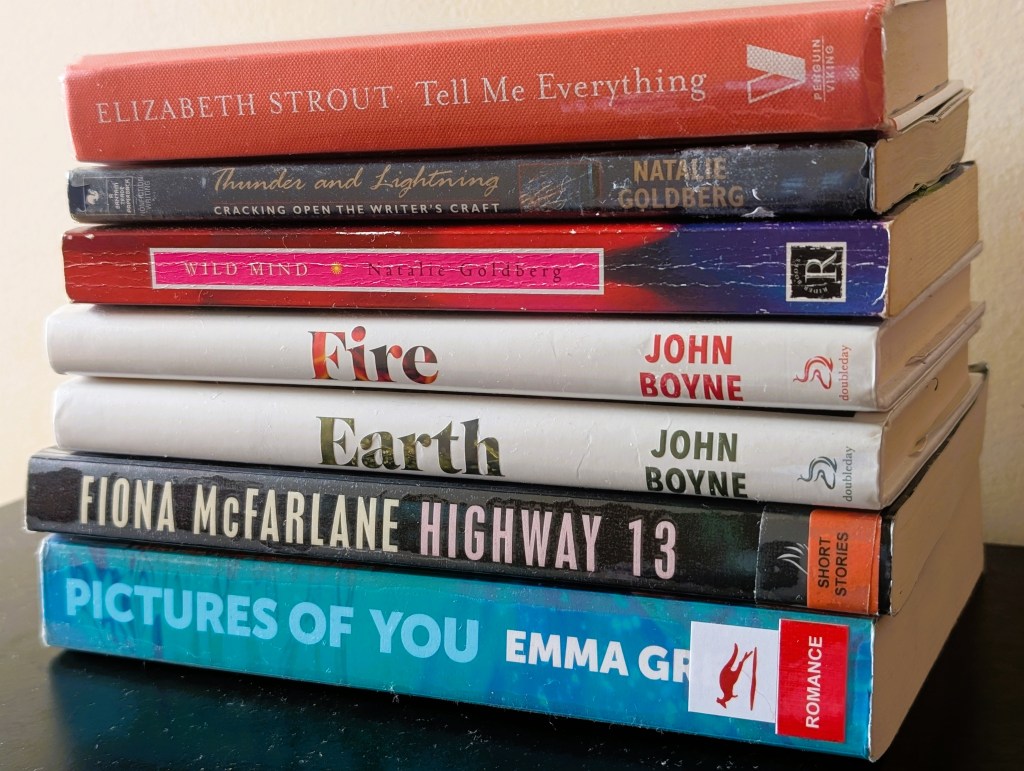
Highway 13 by Fiona McFarlane, Allen & Unwin, 2024

I avoided this for a while because the name and premise made it sound a bit true-crimesque, which isn’t really my thing. But its’ a story cycle, which is definitely my thing and it’s Fiona McFarlane who has a solid track record, so no surprises then, that it was great. The connection linking these stories is a fictionalised version of the Ivan Milat backpacker murders. Especially with the current popularity of true crime, I liked how these stories took the crime off the front page and exploded it into all of the lives, of real ordinary people, who were affected.

Tell Me Everything by Elizabeth Strout, Penguin Viking, 2024

Anyone who has read Elizbeth Strout’s Olive Kitteridge or Lucy Barton books, can just pick this right up and start reading. You know what you’re in for. If you haven’t, you should still pick it up because Elizabeth Strout is the master of small town and big lives. They are big in the sense of being rich and complex like we all are as humans.

She likes to have a central character/s moving things forward while stepping into all of these other lives along the way, reading sometimes more like a story cycle than novel – which is fine by me as you probably know by now.

Bob Burgess and Lucy Barton are good friends. They regularly take long walks together and talk for hours. Often they tell each other stories they’ve been told about people they know or knew. It sounds gossipy but it’s more philosophical.  

Fire by John Boyne, Doubleday, 2024

I can’t recommend this book. John Boyne is a master writer. His female characters are impeccable. I loved Water to bits and pieces and it was actually my doggedness to see the ever-so-slight way the books in this series (Water, Fire, Air, Earth) refer to each other that kept me reading. Otherwise, I’d have to say it was too dark for me. The trauma and revenge and cruelty was just too much, despite being so well-written.

Earth by John Boyne, Doubleday, 2024

Unbelievable. I read this thinking it was going to be lighter than Fire but it’s about a rape trial and broken people and power. There is so little love or hope to be found that once again, I should’ve just stopped and left it. And now that I’m three books in, I’m too stubborn not to read Air.

Wild Mind by Natalie Goldberg, Bantam Books, 1991

You may have heard me go on about Natalie Goldberg’s Writing Down the Bones and how it gets me fired up and back on track when me and the words have split ways. Or maybe it was the Writing Down the Bones Deck, where you pull a card every day and follow the prompt to get back into writing practice through low-stakes words on the page?

Wild Mind was written after Writing Down the Bones. It’s along the same lines but with an extra five years’ experience behind her. It’s full of practical exercises and suggestions. She’s a Zen Buddhist as well and her belief in cutting out the critic to get to the core of what we’re trying to write resonates with me, so this one is going to join my select collection of writing-book bibles, joining A Swim in Pond in the Rain by George Saunders, The Emotional Craft of Fiction by Donald Maas and Writing down the Bones.

Thunder and Lightning by Natalie Goldberg, Bantam Books, 2000

I’ve been in bed with a cold for a few days. Usually, I can’t read when I’m sick and tired but Wild Mind was so compulsive for me that I went straight to another Natalie Goldberg book. I read it but this one has left me a bit deflated and adrift.

Reading Wild Mind, I did think, ‘well all this writing practice and getting to the source of things is great but how do you then turn that into something more than 20-minute timed writing?’ What’s the secret to accessing that judgement-free flow zone when writing and editing a novel or collection of short stories or essays? I was hoping she’d have the answers. She did have some but she also had questions and seems a bit lost herself and I wasn’t ready for this person I’d decided would be my mentor to suddenly have clay-feet and the same doubts as the rest of us. She’s been writing for years, she’s a Zen Buddhist, if she’s still unsure that makes things mighty wobbly for the rest of us.

If you want to keep her a hero/mentor then leave this one and stick to Writing Down the Bones and Wild Mind.

Pictures of You by Emma Grey, Penguin, 2024

Evie Hudson has just lost her husband in a car crash. When she wakes up in hospital, she thinks she’s 16 and can’t remember that she was even married. The people who once mattered to her aren’t even in her phone anymore.

She bumps into her old best friend Drew at her husband’s funeral, not knowing who he is, she asks for a lift out of there and then for help in trying to find her parents. We find out what happened over the past 14 years between Evie and everyone, including Drew who’s torn between not saying anything or saying way too much.

I’ve been sick in bed for a couple of days and this was one of the books I was curled up with. It was the right read but could’ve been closer to a 300-page read than the 400 it was.

If you enjoyed reading this and want to hear about the next bookstack, subscribe to my bi-monthly newsletter below.

Processing…
Success! You're on the list.

The bedside bookstack –Summer 2024/2025

Tomorrow and tomorrow and tomorrow by Gabrielle Zevin, Chatto & Windus, 2022

It was impossible for me to not be completely immersed in this and invested in the characters. It’s friendship, creation, loss, collaboration, loyalty and love that isn’t romantic set against the backdrop of late nineties gaming (both the design and playing). A huge surprise to this non-gamer how fascinating it can be. Gave me lots to think about re the creative process and how much of yourself you need to put into art and what that then means for collaborations. So clever. So interesting. A real surprise. Loved it. Loved it. Loved it.

Sidelines by Karen Viggers, Allen & Unwin, 2024

Anyone who has ever stood on the sidelines of a kid’s sports team will find familiar territory here. The junior development league sounds exhausting. As the stakes get higher for this team, what is supposed to be a game, is clearly much more, at least for the adults involved.

We’ve all got a story behind us and with each chapter dedicated to a parent or team member, actions and behaviour make more sense. This looks at kid’s sport as a way for parents to live out unrealised ambition, personal inadequacies, and competitive tendencies. A sobering take on gender, ambition and how we all play a part in turning something fun completely toxic.

Stoneyard Devotional by Charlotte Wood, Allen & Unwin, 2023

I’m always curious about what a writer is trying to nut out for themselves when they write their novels. Some circle around the same themes, some keep core ones and swap others in and out.this novel feels very much like a reckoning with ageing and mortality, looming environmental changes and disaster, regret, forgiveness and grief.

There’s plenty of time for our main character to reflect on all of this after she joins an isolated religious order near her hometown in regional New South Wales. Contemplative, she works over and again areas of her life she hasn’t yet reconciled, rhythmic and reflective just like her days. 

The Paper Palace by Miranda Cowley Heller, Viking, 2021

Elle Bishop and her family have summered in Cape Cod for generations. One summer she meets Jonas. The two spend all their time together. In the opening pages we find her with three children and a husband. It’s 20 years after she and Jonas met and the night before she slept with him for the first time.

Get ready, you’ll go forwards, backwards and side-step into her parents’ early life and subsequent marriages. It builds up all the layers of what leads to the night between her and Jonas and what will happen after it. I was totally absorbed by all these characters and didn’t want our time to be over.

I spent Christmas day in bed with food poisoning (I know, it feels like a metaphor for something) and was so happy to have this tome on loan from my sister – the absolute perfect summer read (bed-ridden or otherwise). As an Australian reader, the only thing I wished was that I could read something equally as nostalgic and reminiscent of an Australian summer.

Diving, Falling by Kylie Mirmohamadi, Scribe, 2024

One of the reasons I miss Twitter is because I no longer see Kylie Mirmohamadi’s insightful tweets about writers, writing, Virginia Woolf, nature, food and family among many other things. She’s on Instagram but as anyone who remembers the good times knows, you can’t share in the same way. However, you can still find her Writers on Writing list which is ever expanding and an amazing resource for those who love reading about personal process. So, it was like a peep-behind-the-curtain to see a lot of her loves share space in Diving, Falling, her debut novel.

Leila Whittaker is now the widow of a famous Australian artist. He is almost as large in death as he was in life. Leila also has two adult sons. As they all navigate their grief, Leila decides she’s had enough of the eternal people-pleasing and passive acceptance of the-way-things-are. This covers the thorny territory of a family renegotiating their dynamics as new people come into their lives and old habits are shed.

Good Material by Dolly Alderton, Fig Tree, 2023

Alan and Jen have just broken up. Alan didn’t see it coming and is completely heartbroken. His career as a comedian has also flatlined and he has too much time to wonder where it all went wrong.

This came with a v high-praise back cover (quotes about tears by page 5, endless laughs and stop-you-in-your-tracks-heart-wrenching), so I feel like a bit of an ice queen for getting a bit ho-hum reading about Alan’s misery. Can’t figure it out. Heartbreak is the absolute worst and I usually have a lot more sympathy for it but his neediness was a lot to carry. I guess now we know how Jen felt.

Florida by Lauren Groff, Penguin Random House, 2018

You’re always in good hands with Lauren Groff. These short stories are so rich and dense, maybe because we revisit some of the characters again, so it’s not just a one-off slice of their life. The narrators are not all likeable which makes for an even more interesting read. And Florida is always there with its extremes of weather, its endemic creatures (god, there’s always a snake curling around something which was a lot for this non-snake lover) and its sticky humidity in this already warming world.

Still Life with Bread Crumbs by Anna Quindlen, Random House, 2013

Rebecca Winter moves to a small forest cabin in upstate New York to cut costs and retreat from the uncertainty that comes with waning creative fame. Her iconic photographic series ‘Still Life With Bread Crumbs’ doesn’t bring in royalties or requests to appear any more.

This is a slow burn but a really nice read about making changes, second chances, creativity and unlikely love.

Stories by Helen Garner, Text, 2017

This is a collection of 17 of Helen Garner’s short stories. I’m a big fan of Garner. I love hearing her speak, reading her diaries and essays and articles but here’s something which feels like blasphemy, I didn’t get beyond the fourth story in this collection. I know. And I really tried but at this end of the year when there are so many other things waiting to be read, if you’re not feeling it, you’re not feeling it, regardless of the name behind it. I think I needed more narrative and less lens-on-a-moment for it to be a short story. And if the title wasn’t Stories and I was expecting diary entries, would I have read it differently?

Mad About You by Mhairi McFarlane, Harper Collins, 2022

Just what the summer ordered, a Mhairi McFarlane rom-com with a cad, a catch, a totally capable and sassy protagonist and of course the possibility of a happy ending. There’s flatmate-proximity, coercive control, online trolling, loyalty in friendship and misleading first impressions. Done. Easy comfort read sorted.

If you enjoyed reading this and want to hear about the next bookstack, subscribe to my bi-monthly newsletter below.

Processing…
Success! You're on the list.

The bedside bookstack – October 2024

What’s sitting on the bedside bookstack this month.

Solider Sailor by Claire Kilroy, faber, 2023

Soldier speaks this story Sailor, to her baby boy. She tells him of his birth and the early months of his life. She advises him on what to be and not to be in this world and she apologises for the backdrop to his first years when she and Sailor’s father fought and she nearly let all of them go.

She speaks like a madwoman telling all our truths and she is mad with the lack of sleep, the exhaustion, the relentless repetition of those early days of motherhood and the sudden gender division of labour. This is such a sucker punch of read – visceral and all-consuming. You feel like you’re drowning with her, so maybe one for when you’re out of the trenches and sleeping through the night again yourself.

Orbital by Samantha Harvey, Random House, 2024

Six astronauts orbit around the earth over a 24 hour period. That’s it. That’s what happens in this book but it is beautiful and poetic and slowed me down until it felt more like a meditation than a narrative.

As they go about their daily tasks, they think about their lives and their loved ones. They look down on the world as life down there wakes up and goes to sleep again. They record the growing fury of a typhoon for meteorological services back on earth and they wonder about the vast space that opens up when they look in any direction other than earth. Grand in content and contained in style, this is like the space version of a Claire Keegan book. Just gorgeous.

Sky Song by C. A. Wright, Pantera Press, 2024

CA Wright was our October Books at the Bowlo guest. It’s always a treat to read a book and then get more insight into it from both a craft and content angle.

Oriane is the Skylark. She sings the sun and a new day into being every morning. To many she is just a myth. Her father has kept her hidden in safety but as she grows so does her curiosity about what is out there beyond their isolated home in the woods. There is another myth. This one is about the Nightingale who sings forth the darkness each evening and if Oriane is real, perhaps the Nightingale is too.

This is based on a Hans Christian Anderson story. I don’t know the original but I’m always curious about what was kept and shed in the rewrite.

The Emotional Craft of Fiction by Donald Maas, Writer’s Digest Books, 2016

Boom!! That was my head exploding into smithereens while reading this book. Donald Maas is New York literary agent and after reading thousands of manuscripts he started to wonder why some brilliantly plotted and/or written books still didn’t make much of an impression on him.

His analysis is that it is the emotional impact and connection with a book which makes it stand out from others. He lays out different methods for achieving emotional engagement and includes excerpts and exercises with each. This book is a brilliant mix of theory and practice and is now in my Top 3 Writing Books. Yep. That’s saying something.

Oh, what are the other 2 you ask. George Saunders’ A Swim in the Pond in the Rain and Natalie Goldberg’s Writing Down the Bones. I just keep going back to them again and again and I can see how this will be the same.

The Writer’s Library by Nancy Pearl & Jeff Schwager, Harper One, 2020

I know, no one needs more to add to their book list but….I’m a big fan of reading about writers and certainly very happy to take their book recommendations. Each chapter is dedicated to a writer and set out in Q and A style from their early reading to reading which made them want to write, reading which influenced certain works of theirs and what they’re reading now. And instead of having to take notes and add books as you’re reading it, there’s a list at the end of each chapter for all the books which were mentioned!

Just as a warning, it’s an American book, thus US writers only which could be limiting for some readers but I picked and chose a bit and loved that my current fiction fan-girl recipient, Jennifer Egan, was featured.

Wall by Jen Craig, Puncher & Wattman, 2023

An artist returns to Australia to clear out her father’s house after his death. She has plans to turn it into an installation but the reality of a hoarder’s house and the history it holds for her make it a much more complicated task. I’ve only just started this. The stream-of-consciousness prose is densely packed, almost like the narrator’s thoughts are mirroring the clutter she stands in. She jumps from art theory to family memories to her current situation in the same way that she notices and moves on from the objects around her. Not a tired bedtime read, methinks.

If you enjoyed reading this and want to hear about the next bookstack, subscribe to my bi-monthly newsletter below.

Processing…
Success! You're on the list.

Sky Chase – The story of a short story

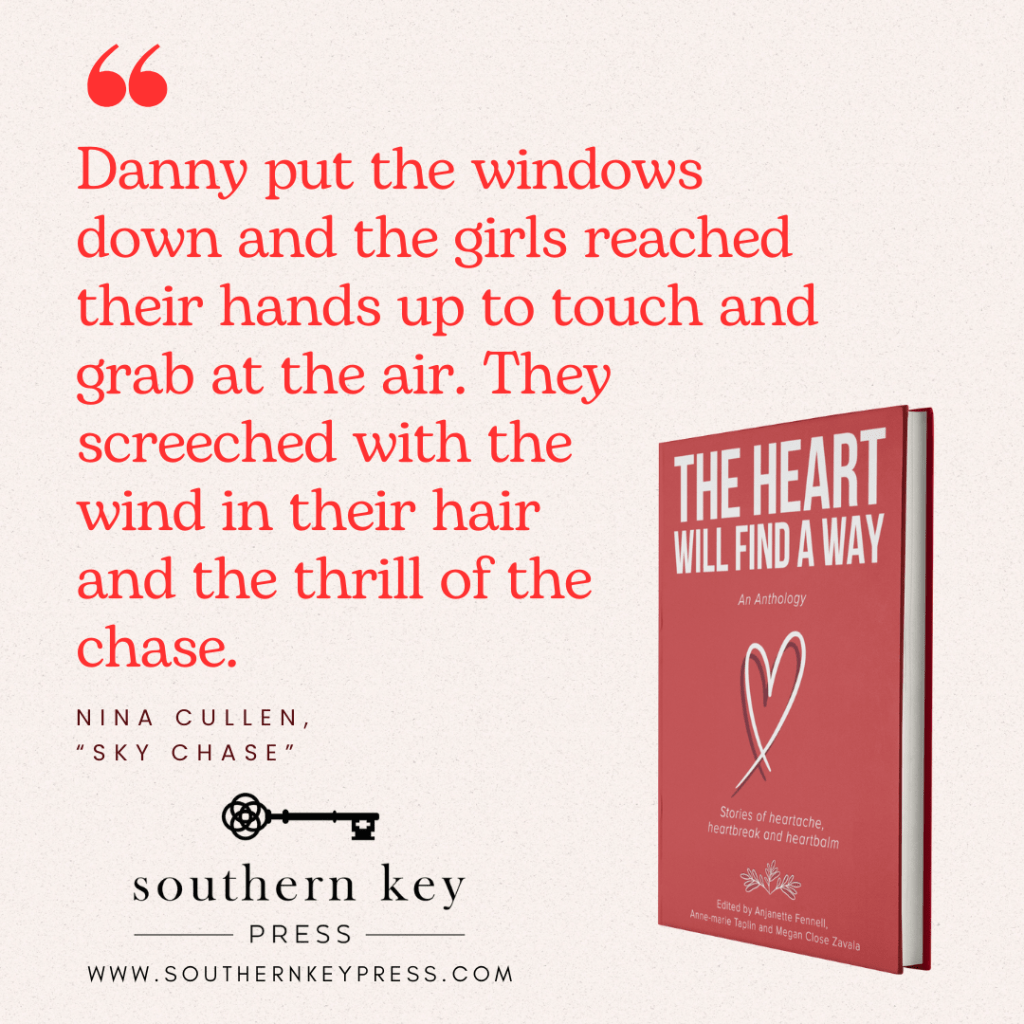
My short story Sky Chase has just been published in the anthology The Heart Will Find a Way. For the process-curious of you who like to know how the sausage is made, here is how it was for this piece.

Do you listen to the Pop Culture Parenting podcast? If you have kids or work with them, then you really should. It’s hosted by Dr Billy Garvey, a developmental paediatrician and Nick McCormack, a ‘developing parent’. These two are such great humans.  They are compassionate and curious and Dr Billy is exactly who you’d want to be your clinician. He’s such an advocate, so measured and thoughtful and reassuring but I digress.

The premise per episode is that they have a topic and pick a clip from a movie, then Billy speaks to it and the deeper dynamics going on. People can send in questions during the following week about the topic, for example resilience in kids, and he answers the questions. They also talk about their own parenting and every week they offer up a ‘Winslow’ for good parenting and a ‘Griswald’ for something they could’ve done better.

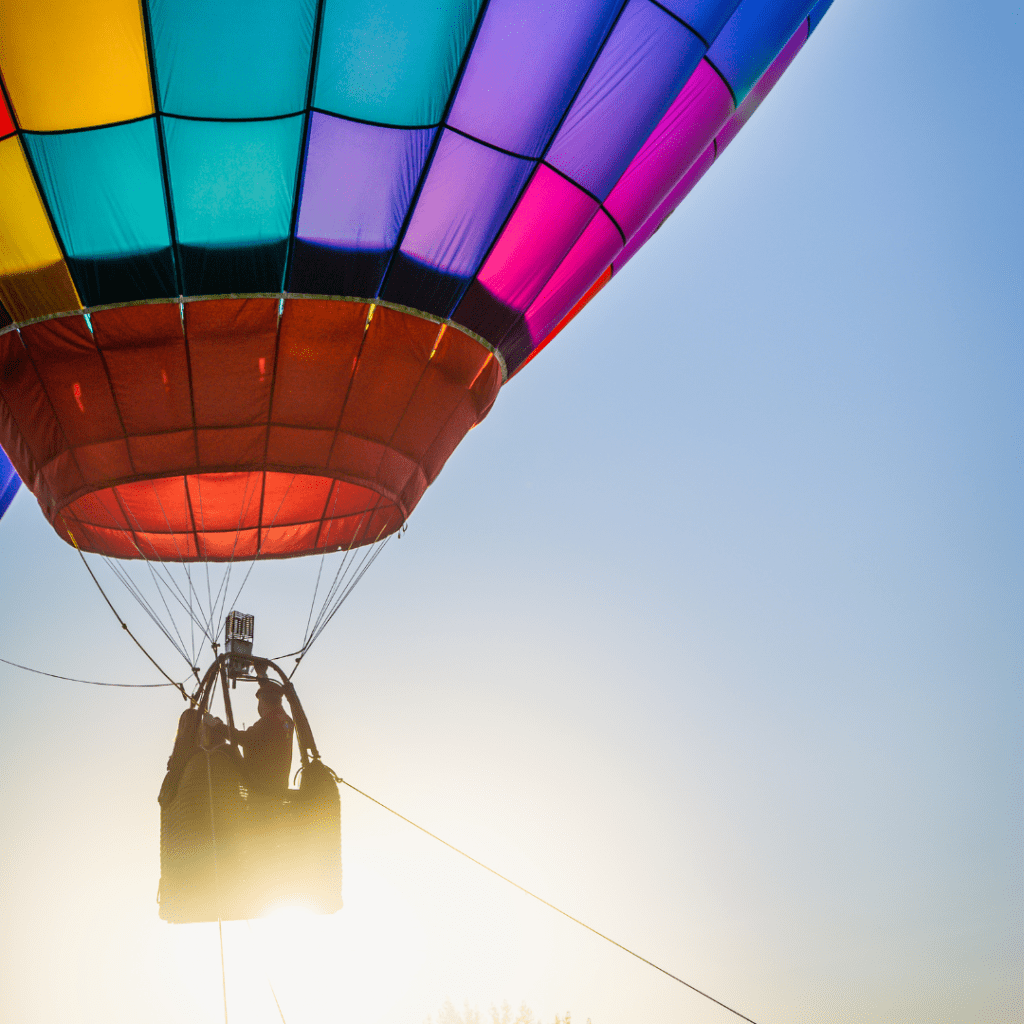
My story was inspired by one of Nick’s Winslows. He has two young daughters and one Sunday morning he gets them out of the house early so his partner can sleep. They’re in the car with no real direction and then they see some hot air balloons and just follow them wherever they go. You can listen to him tell it in Episode 25 (you’ll find it at 12 minutes 30 seconds).

My stories often start as an image. I see something and think, I want that in a story. I don’t know the hows or whys but I just need that image. I thought this image was so beautiful, the silent early-morning city, the air balloons floating and a car with three people and no direction suddenly finding one.

I keep a bit of a writing log, of what I’ve been working on, the date, how many words and how many minutes I was at it. I don’t know why. Sometimes it makes me feel good that I’m regularly sitting down. Other times it makes me feel pretty rubbish about how long it’s been since my last entry. I think it was a hangover from freelancing and logging words and minutes and working out where my hourly rate sat. It’s also interesting to see how some pieces are just pure labour and I can only squeeze out a few hundred words in an hour or two and others just flow.

According to the log, I wrote the Sky Chase draft in 3 sittings. 20 minutes – 370 words. Another 50 minutes took me to 1170 words. And 35 more minutes to finish the draft at 1670 words. So, it’s quite a short short story and was quicker to write than usual. And then I edited it in 3 40-minute sessions.

It was a lucky little piece that almost didn’t get submitted to the one call out and was then accepted.

The Heart Will Find a Way anthology is a memoir and fiction collection of 41 stories of heartache, heartbreak and heartbalm edited by Anjenette Fennell, Anne-marie Taplin and Megan Close Zavala.

I had a chat on ABC Breakfast with Jenny and Dan on Valentine’s Day about the book, my story and being a writer. You can hear the episode (pick it up around the 2 hour 4 minute mark) HERE.

If you’re in Newcastle and you’re looking for a copy, try Maclean’s Booksellers on Beaumont St, Betty Loves Books down at the Station or Harry Hartog Kotara.

For those elsewhere, you can order at your local bookstore with the ISBN (978-0-6455648-7-7) or through Amazon and Booktopia.

If you enjoyed this and want to read more posts or the next Bedside Bookstack, subscribe to my bi-monthly newsletter below.

Processing…
Success! You're on the list.

Keep your notebook close in a crisis

The simple trinity of a pen, a person and some paper has provided solace for many before us.

We’re in uncharted territory here. Most of us haven’t lived through a pandemic. None of us have lived through one of these proportions. When we write, we can use our words as an antidote to anxiety, as freedom from our confinement and to simply mark that we were here.

Writing during a time of crisis is not a new idea. Keeping a journal as a way to manage anxiety and depression was instinctive for writers like Virginia Woolf and Franz Kafka. Both of them used diaries to detail their internal struggles.

There’s a relief in the simplicity of writing a journal. It’s just you and your thoughts without the echo of comments or threads. But it’s also a ritual that can ease your anxiety and give you a chance to reflect. When there are so many things outside our control, routine and habit can help to calm that anxiety.

There is also a sense of ‘better out than in’. The brain dump, brain vomit or ‘morning pages’ from Julia Cameron’s the Artists Way all acknowledge the idea that if you articulate it on a page, it’s less likely to rattle around in your head.

The days can be long and lonely during lockdown. Journaling can give you an outlet for your feelings, providing an internal audience when no one else is there. It also offers a sense of escape from isolation. 

Scottish poet, William Soutar wrote his book, Diary of a Dying Man, when he was quarantined with pneumonia. He spoke of his diary as a true companion and friend. American writer Flannery O’Connor also wrote a lot of her close observations about life as an escape from her sickbed.

Thomas Mallon in A Book of One’s Own: People and their Diaries, said that some people have kept a journal “not so much to record lives as to create them, their diaries being the only world in which they could fully live.” This is true for Xavier de Maistre. In 1794, he wrote A Journey Round my Room. It was written while he was under house arrest after deciding to explore his room and record it as a travel journal.

People journal against anxiety and isolation but you can also write to simply record. You can write for posterity like Samuel Pepys, the grandfather of modern diary entries. He just wrote it how it was.

Pepys covered the quotidian highs and lows of 17th Century England. He also covered the Great Plague of London. As a wealthy man, his experiences weren’t at the frontline but his observations of daily life give us insight into that time. He tells us that he chews tobacco to protect against infection and about his suspicions that the hair from corpses is being used by wig-makers. 

Restrictions feel normal now but they aren’t and this time is going to be interesting to future generations. Curators are already collecting proof of life as we’re living it now. In recovery people often write to addictions or perpetrators. In a pandemic, write to whoever or whatever you need to. Write to your unborn children and grandchildren. They’re going to want to hear about it. Or write to your future self, because we’ll all be different by the end of this.

This is a unique moment in time and our individual experiences of it will create the history of the future. Your notes from the pandemic could enter the Corona-lit canon that is no doubt going to emerge when the masks come off. They’re certainly going to help you survive the anxiety and isolation of life lived within four walls.