What you can learn as a writer from Robbie Arnott’s Flames

This bold and unpredictable debut novel is worth reading once as a reader and again as a writer.

Flames is the debut novel of Tasmanian writer Robbie Arnott. The quote on my cover, from Richard Flanagan, declares it a ‘strange and joyous marvel’. He isn’t wrong.

Readers can get caught up in the language and leaps of magic realism that take you from the brine and obsession of a tuna fisherman to an anthropomorphised ember. Writers can watch and wonder how he does it.

In the early pages, it’s declared that women from the McAllister family sometimes come back after death. Half landscape and half person their re-arrival always ends in flames.

This sets in motion the flight and pursuit which sustains the novel. Levi McAllister wants to make a coffin for his sister, so she won’t have a chance to re-incarnate and can rest in peace. His sister Charlotte sees this as a good reason to leave.

With each chapter, everything shifts; the point of view (POV), tense, text type and even genre. As a reader you can move through the magic of this and as a writer, take your time to enjoy what he’s up to and how boldly he does it.

He moves from the crime/detective narrative of a private investigator, to the diary entries of a mad ranger, to the narrative of a water rat, the magic realism of his main character and the pure poetry that is fire’s own monologue.

If you’re scared of writing a novel, and think it’s too big to take on, maybe try slicing it up. These chapters could be separated and stand independently as short stories but turn into something unique when presented together.

Who knows if it was pure experimentation or something much more deliberate on his behalf? Strategic or not, the result is so interesting and strange. There’s plenty in there to inspire mixing things up a little in your own writing and seeing where it takes you.

Bookshelf bliss

A shelf full of books will always be a comfort and delight.

I recently watched a movie and at different times a son and a father moved into new places and had to find things to put on their empty shelves. Empty shelves? The idea just doesn’t compute.

I don’t think our place will ever have enough shelf space. We have books lying horizontal across vertical rows. I think there are one or two shelves which even have double rows. I know, not fair at all to the inside titles who never get to see the light of the lounge room. There are book piles by our bedsides and piles that have collected where children left them.

I know people love their negative space but for me the joy of a bookshelf is to see it full. There is something so comforting about a full bookshelf in all its proud coloured glory. I love walking past houses where people don’t shut their curtains, especially at dusk. I’m a bit nosy anyway but seeing into rooms with a bookshelf at capacity is just a delight.

I read an article by a writer who had dumped all her books in favour of a digital library. She wrote of how bereft she then felt, looking around and suddenly being a person without books. Marie Kondo copped it when she said people shouldn’t have more than 30 books. I think it got taken out of context. Her philosophy is about keeping what you love and she’s obviously not that big on books. I’m happy to thin the ranks and pass on what doesn’t mean anything to me anymore but the physical presence of books on a shelf is what sparks joy for me.

I am also prone to bookshelf envy. But it’s a light envy, because really, it’s love. Pinterest sends me the most dazzling shots of bookshelves and I love reading library features with their angled shots of tiered shelves. My friend recently had bookshelves built into her study, two wonderful stacks that reach the ceiling. Bliss. Her sister has a reading room. I wasn’t sure they even existed outside Austen novels. Swoon.

Even drawings of bookshelves will do. Julia Donaldson’s wonderful picture book The Detective Dog follows the mystery of some stolen school books. There’s a page near the end when the book thief is introduced to the local library. We’ve read it hundreds of times and I still love turning the page for the big reveal – a double page covered in bookshelves.

Thousands of books from the floor to the ceiling. The books gave the thief the most heavenly feeling.

The Detective Dog, Julia Donaldson

That’s exactly how it feels.

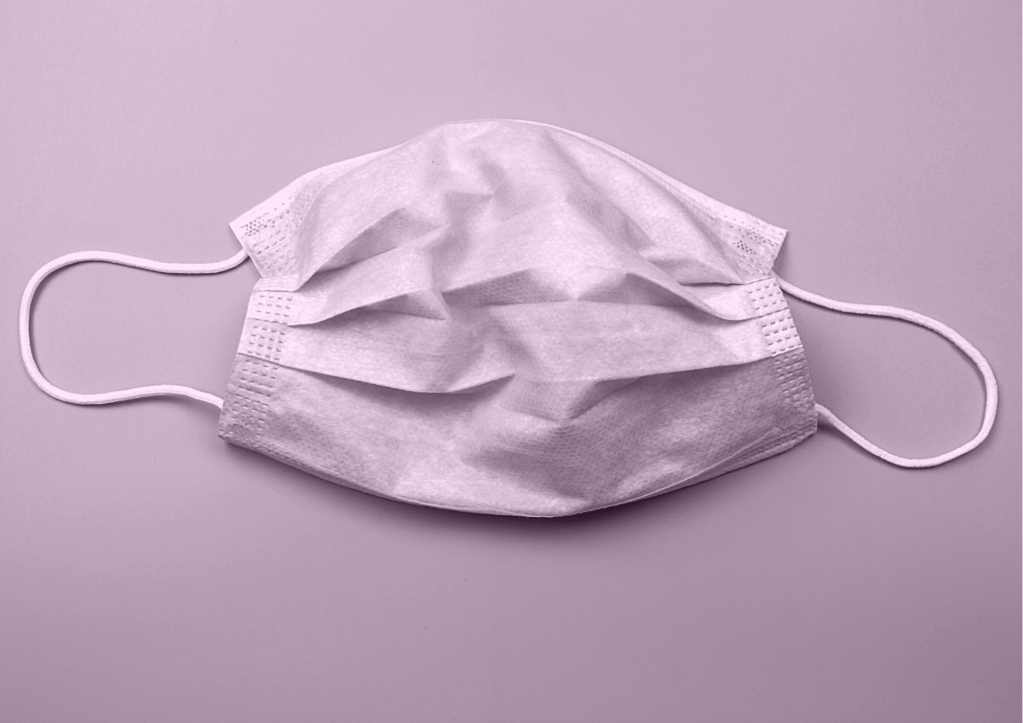
Who will you be when the masks come off?

What will you do differently when the hand sanitiser is put away and we can hold each other as close and tight as we want to?

Six months ago, COVID-19 came along. Under a microscope, it looked like a red wedding bouquet but coronavirus turned our little lives inside out. Our mortality and vulnerability were suddenly obvious. Touch and proximity disappeared. Industries and their jobs vanished.

And we were all told to stay home. No school or office. Commutes disappeared, so did most weeknight obligations. No visiting family or friends. No swimming lessons or yoga practice. No movie nights or catch-up coffees. No park play-dates. No live music or after show eats. No leg waxing or window shopping. No street vendors. No travel. No hugs and kisses.

As I pined for connection with family and friends, I also realised how much I needed to get outside. I craved nature, greenery, ocean air, any contact with the world other than the four walls I lived in. We took walks, discovered new pockets of our area and talked to neighbours we didn’t know.

The weekends stretched out to become almost spacious. I had time to walk to the pace of my two-year old and was sad to realise that I usually tugged him along. And how nice was it to see the parks with people in them and families riding their bikes together?

With all the white noise of normal life muted, there was more time to think -not about the bigger picture of globalisation or economic models, but on a personal level about what really matters. I certainly won’t take touch and its connection for granted. I’d like community and kindness to be a bigger part of my life. I’d like to keep the pace in step with my kids and have time to cook and play and walk as a family.

When the world went on hold, my to-do list shrunk and I was liberated from all the other mental ‘stuff’ that constantly hovers on my periphery. Now the restrictions are being eased and I hope that I can hold onto some of my lockdown lessons. 

It’s human instinct to reassess when your life has been interrupted in such a dramatic way. What will you jettison and what will you keep when the masks come off?

Shakespeare, me and an unchanged signature

Anyone else still using the loopy mess they invented when they were 10?

Apparently when Shakespeare was bored he would practise signatures over and over to decide which one he liked the best. When I was ten I, like Shakespeare, was bored and decided it was time to invent my signature.

A signature was such an adult gesture. I wanted to emulate the sophisticated copperplate loops I’d seen. However, my cohort at school didn’t learn copperplate handwriting. Our cursive was called ‘foundation’ handwriting and it was really just print tenuously held together by little curls from one letter to the next. There was nothing romantic or slanted. Foundation handwriting was all function and no flourish.

There are a few decisions to be made when you create a signature. Do you use your full name, initials or an initial and a surname? I decided on a very loopy N Cullen. I was proud that the N was surrounded by the C of my surname. It seemed like a clever touch. And, yes, it’s as bubbly and tween as it sounds. It’s lucky I didn’t use Nina, because there’d probably still be a heart over the i. This was supposed to be my understudy signature while I perfected some neat and impressive cursive squiggle worthy of the important documents it would one day grace.

Then I started signing things; a kids’ bank account, a passport, birthday cards. 10 years later when I wanted to dissociate myself from this loopy embarrassment, I’d signed too many things. I had a driver’s licence and a bank card. Every official document that’d been pushed under my pen had the same signature.

I never sat down again to nut out my signature and create something with a bit more dignity. Luckily, signatures don’t matter now as much as they used to. Cheques barely exist and I don’t even think you sign the back of your credit card anymore. Legal and medical documents still need you to make your personal mark but I’ve made peace with my squiggles now. It makes me look young.